
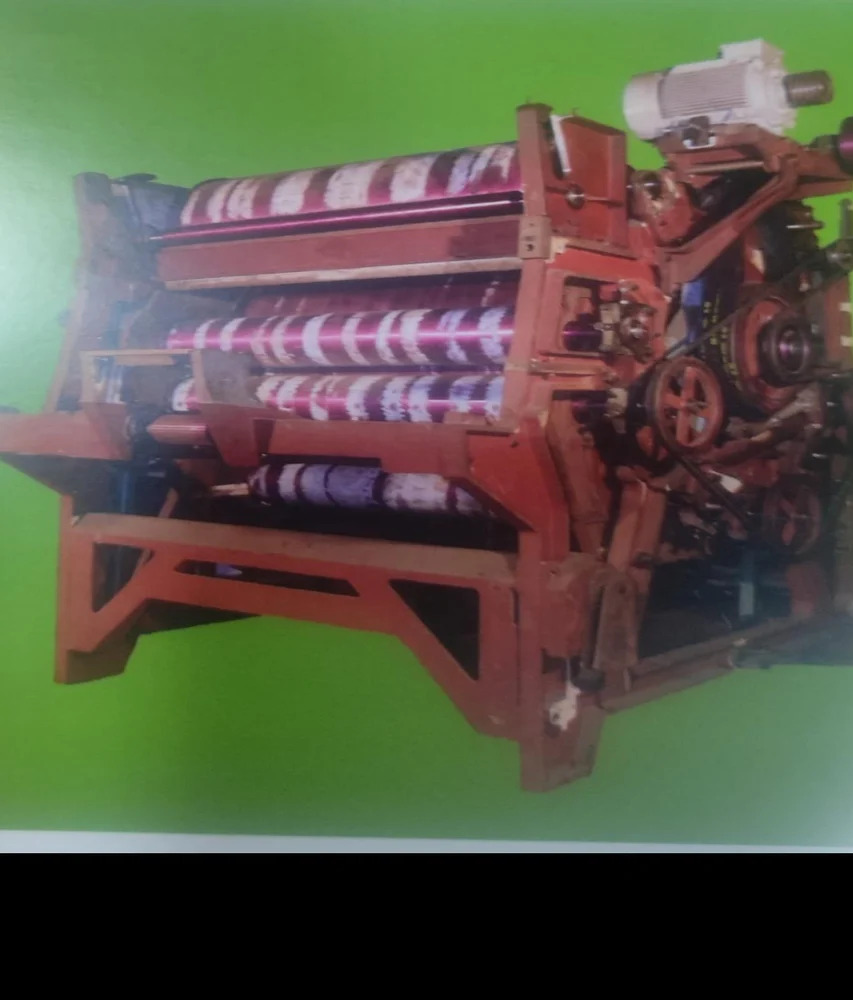
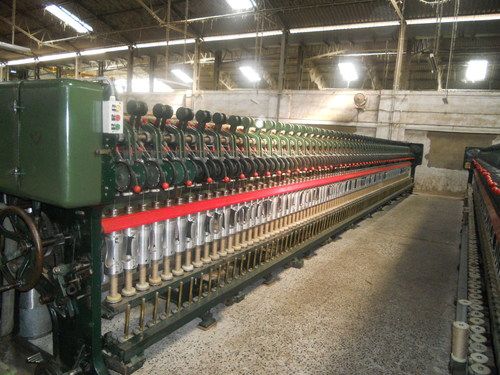
Jute Finisher Card
50000 INR/Piece
Product Details:
- Product Type Jute Finisher Card
- General Use Jute fibre carding and finishing
- Material Stainless Steel
- Type automatic
- Capacity 1000-1200 kg/shift
- Weight (kg) Approx 3200
- Computerized No
- Click to View more
X
Jute Finisher Card Price And Quantity
- 1 Piece
- 50000 INR/Piece
- Multiple lags and workers fitted
- 495 mm
- 6-12 rpm
- Scutched or breaker carded jute
- <75 dB
- 750 mm
- Grease cups, manually lubricated
- 640-800 rpm
- Continuous
- Optional
- 320-380 rpm
Jute Finisher Card Product Specifications
- No
- Jute Finisher Card
- Approx 3200
- Manual/Automatic
- Cylinder with Lags
- 380V / 415V
- Available
- Feed Roller
- Green / Blue (As per manufacturer standard)
- 7.5 - 15 HP
- automatic
- 1000 - 1800 mm (Width)
- High Performance
- 1000-1200 kg/shift
- No
- Stainless Steel
- Roller Type
- Approx 4100 x 2700 x 2000 mm
- Jute fibre carding and finishing
- Manual
- Carding
- Multiple lags and workers fitted
- 495 mm
- 6-12 rpm
- Scutched or breaker carded jute
- <75 dB
- 750 mm
- Grease cups, manually lubricated
- 640-800 rpm
- Continuous
- Optional
- 320-380 rpm
Jute Finisher Card Trade Information
- Cash Against Delivery (CAD), Cash on Delivery (COD)
- All India
Product Description
Efficient Jute Fiber Processing
This finisher card is engineered to streamline the processing of scutched or breaker carded jute, turning coarse fibers into a uniform sliver ready for further spinning. Its continuous operation and roller-type take up allow for high throughput, making it an integral part of jute mills seeking consistent quality and productivity.
Robust Build and Operator-Friendly Design
Constructed using durable stainless steel and fitted with multiple lags and operator stations, this machine is designed for heavy-duty use. Manual and automatic controls for let-off and filling selection, along with a yarn package stand, promote user convenience and flexibility in daily operations.
Energy-Efficient and Safe Operation
With a power range of 7.5 - 15 HP and operating voltages of 380V/415V, the finisher card combines energy efficiency with robust performance. Its sound level is kept below 75 dB, ensuring a quieter working environment, while manual grease lubrication keeps maintenance simple and cost-effective.
FAQ's of Jute Finisher Card:
Q: How does the Jute Finisher Card process jute fibers?
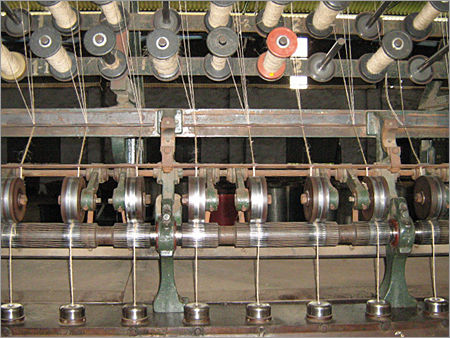
A: The Jute Finisher Card receives scutched or breaker carded jute as feed material. Using a combination of lags on the main cylinder and a doffer, it opens, aligns, and refines the fibers into a uniform sliver suitable for further spinning processes.Q: What are the main benefits of using this finisher card in jute mills?
A: This machine enhances productivity with its continuous operation, delivers consistent fiber quality, and features a robust stainless steel build for longevity. The low noise level and simple lubrication system also contribute to a safer, more user-friendly working environment.Q: When should manual versus automatic let-off be used?
A: Manual let-off is suitable when operators require precise control over the feed rate, while automatic let-off is ideal for higher throughput or standardizing production. The choice depends on production requirements and operator preference.Q: Where is the Jute Finisher Card commonly used?
A: This machine is widely used in jute processing units, spinning mills, and textile plants across India and in export markets, wherever continuous, high-capacity carding and finishing of jute is needed.Q: What is the maintenance process for this machine?
A: Maintenance is primarily manual, involving periodic lubrication via grease cups and routine checks on lags, rollers, and the feeding system to ensure smooth operation and durability.Q: How many workers are required to operate the Jute Finisher Card?
A: The machine is designed to accommodate multiple lags and workers. The exact number of operators may vary based on plant scale, but its user-friendly design supports efficient teamwork.Q: What kind of voltage and power supply does the machine require?
A: The Jute Finisher Card is compatible with standard industrial voltages of 380V or 415V and operates within a power range of 7.5 to 15 HP.Tell us about your requirement

Price:
Quantity
Select Unit
- 50
- 100
- 200
- 250
- 500
- 1000+
Additional detail
Mobile number
Email

Other Products in 'Jute Machinery' category

JUTEX INDUSTRIES PRIVATE LIMITED
GST : 19AABCJ7924N1ZZ
GST : 19AABCJ7924N1ZZ
Contact Details

- 38, N. S. Road, Kolkata - 700001, West Bengal, India
- Phone :08045479382
- Send Inquiry
 Send Inquiry
Registered Office and Mill:
Bonderbill, Raghunathpur, Hooghly - 712247, West Bengal, India.
Mobile: 09874245267
Corporate Office and Works:
206/2, T. N. Mukherjee Road, Makhla - II, Raghunathpur, Hooghly - 712247, West Bengal, India.
Mobile: 09874245274, 09831240400
CIN U29269WB1998PTC086603
GSTIN - 19AABCJ7924N1ZZ
City Office:
38, Netaji Subhas Road, 1st Floor, Kolkata-700001, West Bengal, India.
Mobile: 09874245269
Mr. Santanu Adak (Managing Director)
Mobile :09831240400
Mr. Shyamal Pal (GM)
Mobile :09874245274
Bonderbill, Raghunathpur, Hooghly - 712247, West Bengal, India.
Mobile: 09874245267
Corporate Office and Works:
206/2, T. N. Mukherjee Road, Makhla - II, Raghunathpur, Hooghly - 712247, West Bengal, India.
Mobile: 09874245274, 09831240400
CIN U29269WB1998PTC086603
GSTIN - 19AABCJ7924N1ZZ
City Office:
38, Netaji Subhas Road, 1st Floor, Kolkata-700001, West Bengal, India.
Mobile: 09874245269
Mr. Santanu Adak (Managing Director)
Mobile :09831240400
Mr. Shyamal Pal (GM)
Mobile :09874245274

|



JUTEX INDUSTRIES PRIVATE LIMITED
All Rights Reserved.(Terms of Use)
Developed and Managed by Infocom Network Private Limited.
Developed and Managed by Infocom Network Private Limited.


